

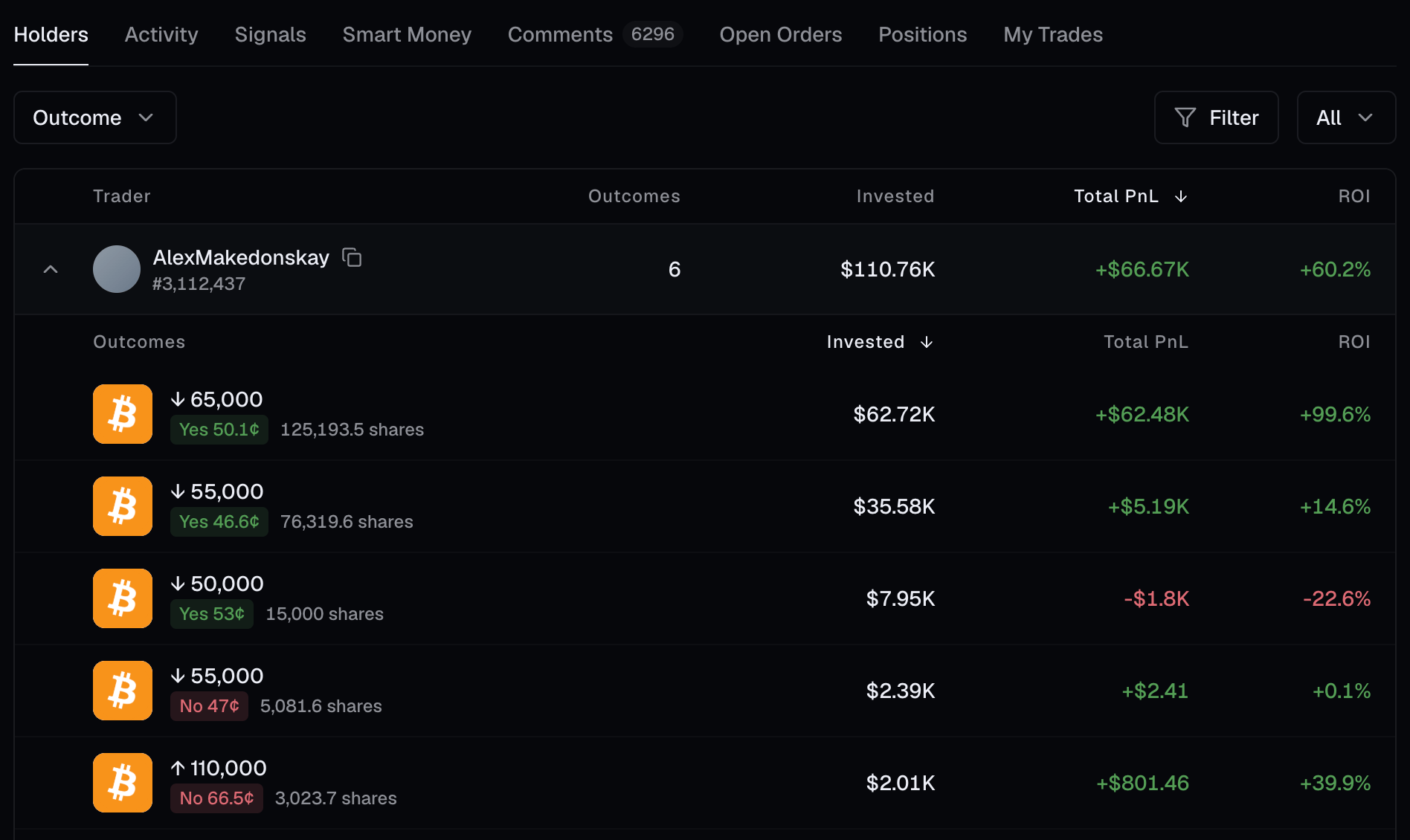
One wallet expanded to show the six outcomes behind its event-level total.
Three views
They share a shape, but not every column appears on all three —
currentValue is absent from closed, since an exited position has none. The table below marks where each column applies.
Columns
Outcome-level detail
tokenMetadata is an array, one entry per outcome the wallet holds:
Scoping the query
Holders is always scoped to an event, soeventId is required.
400.
Narrowing further
BeyondeventId, you can filter on userId, positionId, userRank, and the numeric measures — invested, totalPnl, unrealizedPnl, pnlPercentage, currentValue and volume. See Filtering for the syntax.
Whales with a losing position, for example:
Holders has no
searchKey — it’s already scoped to one event, so there’s nothing to search across. Use the Activity endpoint to find an event by name first.API endpoints
All Holders
POST /api/v1/market-holders/allActive Holders
POST /api/v1/market-holders/activeClosed Holders
POST /api/v1/market-holders/closed